



Best Drones Australia for Agriculture
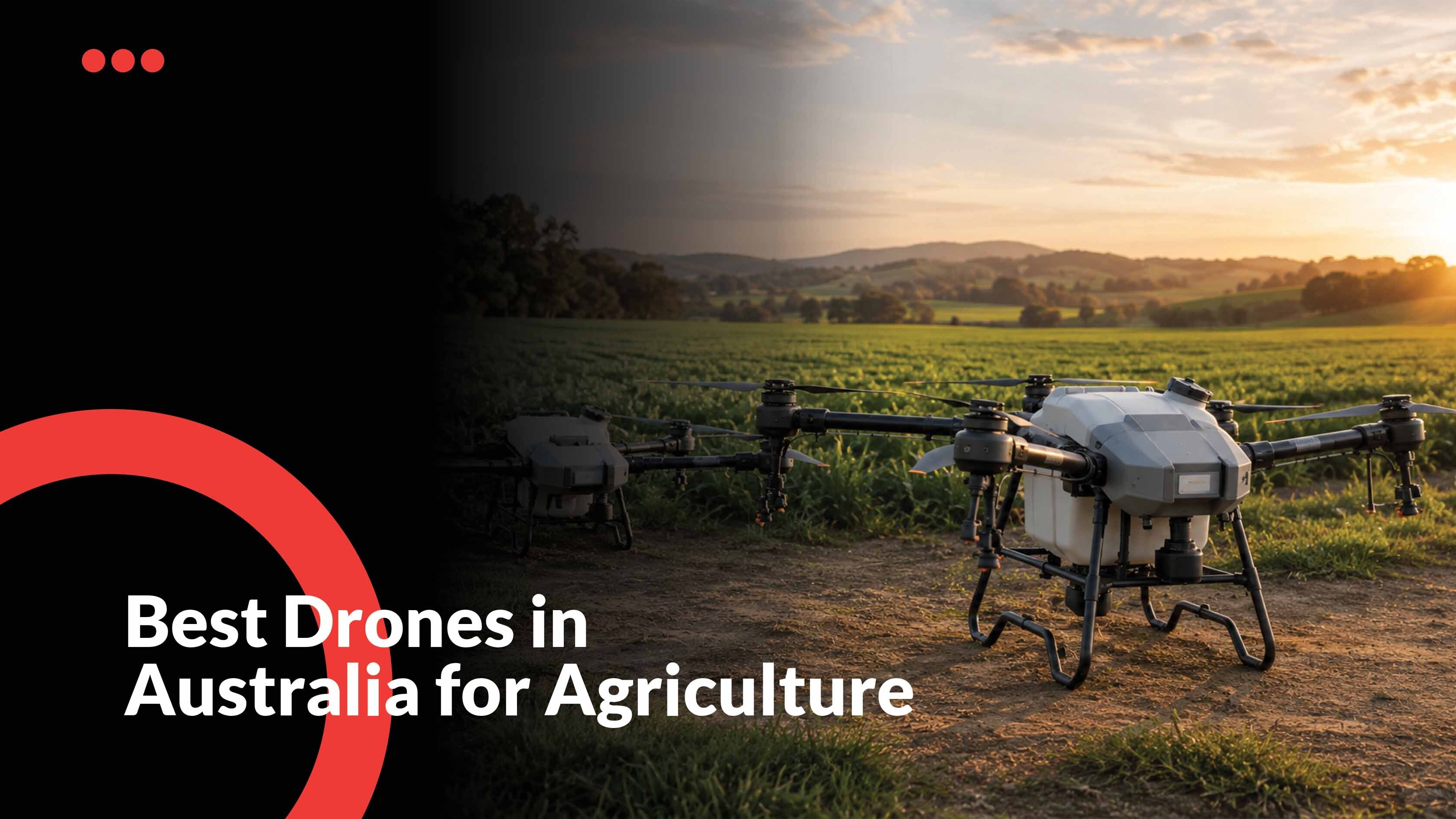
Best Drones Australia for Agriculture: A Practical Farm Buyer Guide
The Best Drones Australia for Agriculture are not regular camera drones with a fancy label. Farm drones need tanks, pumps, spreading systems, radar, RTK, route planning, and safety sensors.
For Australian farmers, the right drone can help with spraying, spreading, plant protection, and hard-to-reach field work. It can also reduce time spent on manual jobs.
At E-Ozzie, the main DJI agriculture options we discussed are the DJI Agras T25P and DJI Agras T100. Both are built for farm work, but they suit different farm sizes.
Rules for Commercial Agriculture Drone Use in Australia
If you use agriculture drones for business or paid work, you must follow CASA rules before flying.
Key requirements (simple overview)
-
Commercial drones must be registered with CASA
-
Operators may need:
-
Drone operator accreditation
-
A Remote Pilot Licence (RePL)
-
A ReOC (operator certificate) for advanced operations
-
Rules depend on:
-
Drone weight
-
Flying on your own land or not
-
Spraying or spreading operations
-
Use of chemicals
-
Visual line-of-sight flying
-
Complexity of the job
Spraying rules (important)
-
Agricultural spraying may also require state or territory chemical approvals
-
You must follow:
-
Chemical label instructions
-
Wind and drift conditions
-
Environmental regulations in your state
For example, Agriculture Victoria states drone spraying requires the correct chemical licence and may require CASA licensing conditions depending on the operation.
Quick compliance checklist
|
Rule Area |
What to Check |
|
CASA registration |
Business-use drones must be registered |
|
Pilot requirements |
Accreditation, RePL, or ReOC may apply |
|
Chemical rules |
Check state rules before spraying chemicals |
|
Spray conditions |
Follow product label, wind, and drift rules |
|
Flight area |
Airspace, people, property, line-of-sight |
|
Insurance |
Farm, public liability, aviation cover |
This is not just paperwork. It helps avoid fines, spray drift issues, unsafe flights, and insurance problems. Always confirm rules before using drones like the DJI Agras T25P or T100 commercially.
Why Agriculture Drones Are Different
A normal drone takes photos. An agriculture drone does work.
It can carry liquid, spread dry material, follow planned routes, and apply product across fields. That is why payload and flow rate matter more than camera quality here.
If you are comparing the Best Drones Australia for Agriculture, start with these questions:
-
How large is the farm?
-
Are you spraying liquid or spreading dry material?
-
Do you need single-person operation?
-
How often will the drone need refilling?
-
Is the land flat, sloped, or broken into smaller blocks?
These answers will quickly narrow the choice.
Best Farming Drones Australia: What Actually Matters?
When looking at Best Farming Drones Australia, do not only look at the drone size.
A bigger tank helps cover more land with fewer stops. A higher flow rate helps apply liquid faster. RTK helps the drone stay closer to the planned route. Radar, vision, and LiDAR help the drone read the working area better.
This matters in real use because farms are not perfect open squares. There are trees, sheds, fences, power poles, uneven ground, and different crop layouts.
A good farm drone should help the operator work with those conditions, not fight them.
DJI Agras T25P: Best for Small to Medium Farm Work
The DJI Agras T25P is the more compact option.
It is built for single-person operation, which makes it useful for smaller farms, orchards, mixed blocks, and operators who want a simpler farm drone setup.
The T25P has:
-
20kg spraying capacity
-
25kg spreading capacity
-
Up to 16 L/min flow rate
-
Dual sprinklers
-
High-precision screw feeder spreading system 4.0
-
Safety System 3.0
-
Foldable body for easier transport
That 16 L/min flow rate matters. It means the drone can move a serious amount of liquid through the spraying system without feeling underpowered.
The 25kg spreading setup is also useful for fertiliser, seed, or feed spreading (depending on approved use).
Where the T25P Helps in Real Farm Use
The T25P suits jobs where a large machine may be too much.
Think smaller paddocks, narrow areas, slopes, patch spraying, orchards, and sections where ground access is difficult. Instead of moving a larger sprayer through every small area, the drone can fly planned routes from above.
This is where Precision Farming becomes useful. The operator can plan work more carefully, reduce overlap, and avoid wasting product.
For many farms, the T25P is the better first step into drones because it balances size, payload, and transport.
DJI Agras T100: Best for Large-Scale Farm Work
The DJI Agras T100 is the heavy-duty option.
This drone is designed for large farms that need more capacity and fewer stops.
The T100 has:
-
100L liquid tank
-
100kg spreading capacity
-
GNSS dual-antenna RTK positioning
-
LiDAR sensing
-
Penta-Vision system
-
Millimetre-wave radar
-
AR-assisted obstacle detection
-
Foldable design
-
Up to 10 m/s flight speed
The big benefit is fewer refills. A 100L tank allows much larger coverage per flight.
That matters when time is limited, weather windows are short, or the job covers large areas.
Why LiDAR, Radar, and RTK Matter
The T100 feels more advanced because of its sensing system.
-
LiDAR helps measure distance and shape
-
Radar helps detect objects and ground conditions
-
Vision system improves awareness of surroundings
-
RTK improves route accuracy compared to standard GPS
In simple terms, these features help the drone follow planned routes more accurately and
safely during spraying and spreading.
A trained operator is still essential.
Agriculture Drone Australia: T25P vs T100
If you want one clear answer:
-
Choose the T25P for smaller farms, orchards, and regular spraying/spreading jobs
-
Choose the T100 for large-scale farming, high-volume spraying, and heavy spreading work
The best option depends on farm size, job volume, and refill needs.
Drone Spraying: What Buyers Should Understand
Drone Spraying is not just flying over a paddock and releasing liquid.
Good spraying depends on:
-
Flow rate
-
Droplet size
-
Flight height and speed
-
Wind conditions
-
Route spacing
-
Crop type
If these are not set correctly, coverage can be uneven.
The T25P offers strong performance for its size, while the T100 is built for high-volume operations.
Drones in Agriculture: Real Benefits
The value of drones in agriculture comes from practical use.
They help with:
-
Hard-to-reach areas
-
Slopes and wet ground
-
Reducing manual spray exposure (where applicable)
-
Faster coverage of certain jobs
-
More precise application in targeted areas
They do not replace all farm machinery, but they are a strong support tool.
Compare DJI Agriculture Drones at E-Ozzie
|
Drone Model |
Best For |
Spray Capacity |
Spreading Capacity |
Key Tech |
Main Benefit |
|
DJI Agras T25P |
Small to medium farms |
20kg |
25kg |
Safety System 3.0, screw feeder 4.0 |
Easier single-person farm work |
|
DJI Agras T100 |
Large farms |
100L tank |
100kg |
LiDAR, radar, Penta-Vision, RTK |
High-capacity spraying and spreading |
Which One Should You Choose?
Choose the DJI Agras T25P if you want a practical, easier-to-manage drone for smaller or mixed farm operations.
Choose the DJI Agras T100 if you need maximum capacity, fewer refills, and advanced sensing for large-scale work.
The Best Drones Australia for Agriculture are not always the biggest drones. They are the ones that match your land size, job type, and workflow.
FAQs
What are the best drones for farm spraying?
The DJI Agras T25P suits smaller farms, while the DJI Agras T100 suits large-scale spraying and spreading.
Is the DJI Agras T100 better than the T25P?
Yes, for large operations. It has a 100L tank, 100kg payload, RTK, LiDAR, radar, and advanced vision systems.
Is the DJI Agras T25P good for smaller farms?
Yes. It is designed for single-person use and smaller to medium farm jobs.
Why does flow rate matter?
Flow rate determines how much liquid is applied per minute, affecting speed and coverage efficiency.
Are agriculture drones hard to choose?
They can be if you only compare specs. Start with farm size, job type, and refill needs.
Final Advice
The Best Drones Australia for Agriculture should make farm work more practical, not more complicated.
For smaller farms, the DJI Agras T25P is a strong starting point. For large-scale operations, the DJI Agras T100 is the more powerful solution.
E-Ozzie can also help before you buy. You can visit stores in Melbourne, Sydney, and Perth, or get support via phone, video call, or online delivery across Australia.


Leave a comment