



Thermal Drones for Industrial Inspection in Australia: Best Uses & Applications
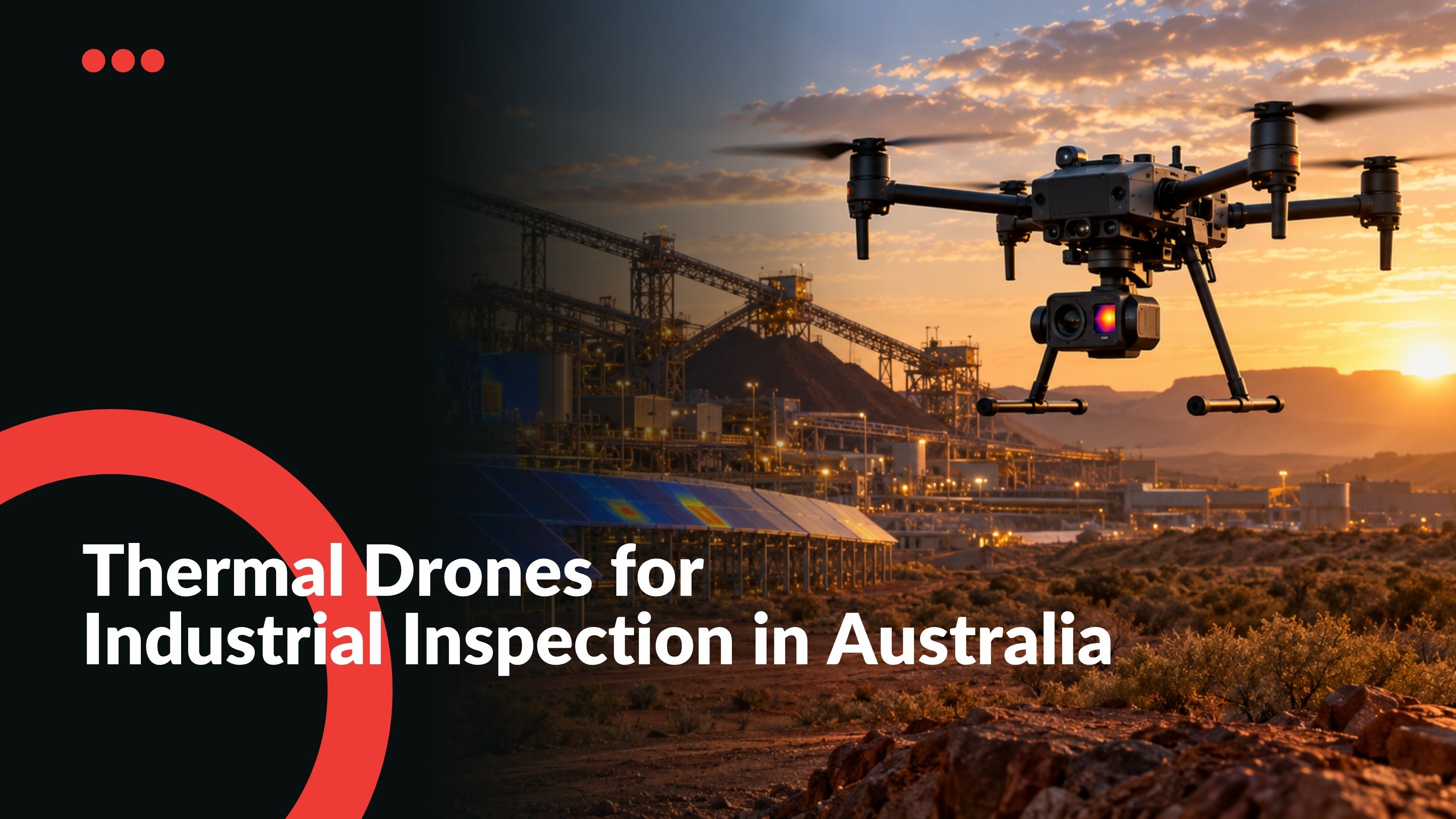
Are you done with risking your team's safety and wasting days on manual site checks? Let's be real. Workers face serious risks when they climb scaffolding or shut down a solar grid to find a faulty panel. This outdated process costs serious money and delays your daily operations. A reliable thermal drone for inspection solves this exact problem for modern businesses. These flying tools let you spot heat leaks, electrical faults, and equipment stress straight from the ground. And they do it incredibly fast.
You fall behind your competitors if you rely on old methods for your Australian industrial site today. This guide shows you exactly how an enterprise thermal drone fits into your workflow. We will explore what models actually perform and how to get the best return on your investment.
How a Thermal Imaging Drone Works in the Field
You might wonder how these cameras actually detect unseen problems. A thermal imaging drone does not see standard visible light. It reads heat signatures. Objects emit infrared energy based on their physical temperature. The thermal drone camera translates that raw energy into a highly visible image for the pilot.
Hotter areas show up as bright colours like red or white. Cooler areas look dark blue or black. This means you can inspect high-voltage power lines or massive mine sites without touching a single dangerous wire or unstable rock. Frankly, it is the safest way to perform preventative maintenance on heavy machinery. Operators stay out of harm's way while gathering highly accurate data.
Top Thermal Drone Uses Across Australian Industries
Australia presents some of the harshest working conditions on earth. That is exactly why an industrial thermal drone thrives in this environment. Let's look at where they make the biggest impact for businesses right now.
Solar Farms and Renewable Energy
Australia builds solar farms at a massive pace across the country. A DJI thermal drone can fly over a 100-megawatt plant and spot defective solar cells in just a few minutes. Crews no longer need to test individual panel strings by hand. The drone highlights the exact hot spot on a digital map. Technicians then walk straight to the broken panel and replace it, saving hours of wasted labour.
Mining and Heavy Industry
Machinery runs around the clock in Western Australia and Queensland. Overheating conveyors, pumps, and motors causes massive financial delays when they break down unexpectedly. A high-quality thermal drone for inspection lets maintenance crews spot hidden friction points before a machine actually snaps. Fixing a warm bearing is cheap. Replacing a completely destroyed conveyor belt costs millions.
Building Envelopes and Roof Inspections
Poor insulation costs building owners thousands of dollars in wasted energy bills. An enterprise thermal drone reveals the exact locations where heat escapes through roofs or windows during the winter months. Property managers use this exact data to fix leaks, lower their power bills, and keep tenants comfortable.
Finding the Right Thermal Drone Australia Options
The hardware you choose matters a lot. You want something completely reliable that meets strict Australian standards. Top-tier options exist for professionals who need accurate results. You can find the best tools at E-Ozzie, a trusted supplier of high-tech equipment.
Explore their full range at https://eozzie.com.au/ or check their specific commercial models at https://eozzie.com.au/collections/dji-high-tech-drones.
Take a quick look at the top models dominating the 2026 market.
Drone Model |
Best Australian Use Case |
Key Thermal Specs |
Flight Time |
|
DJI Mavic 3 Thermal |
Rapid deployment, roof checks, fast response |
640×512 resolution |
45 minutes |
|
DJI Matrice 350 RTK |
Heavy industrial wind turbines, massive scale |
Zenmuse H30T payload compatible |
55 minutes |
|
DJI Matrice 30T |
Harsh weather, search and rescue operations |
High-res thermal + laser rangefinder |
41 minutes |
Key Features of a Thermal Drone Camera
You need to look past the marketing hype when evaluating your equipment. Look for these core specs before buying:
-
Radiometric Capability: A radiometric thermal drone camera measures the exact temperature of every single pixel in the image rather than showing relative colour contrasts. This gives you precise, verifiable figures for engineering and maintenance reports. Non-radiometric cameras only show you relative colour differences.
-
Isotherm Controls: This software feature lets you highlight specific temperature ranges in high-contrast colours like red. You can set the drone to flash red for any object hotter than 80°C. This lets pilots spot severe heat anomalies instantly without manual guessing.
-
High Ingress Protection (IP) Rating: You need a high IP rating to protect your industrial thermal drone optics and electronics against Australian dust, sand, and sudden rainstorms.
CASA Regulations for Flying a Thermal Drone in Australia
Buying the drone is only step one of the process. You must follow the strict rules set by the Civil Aviation Safety Authority (CASA) before taking on commercial jobs.
-
Remote Pilot Licence (RePL): Get a Remote Pilot Licence (RePL) if you plan to fly your DJI thermal drone for commercial work or business operations.
-
Remote Operator's Certificate (ReOC): It is needed if your business operates as a commercial drone entity or requires advanced flight privileges, such as night operations or Beyond Visual Line of Sight (BVLOS) flights.
Here's the catch. CASA certifications protect your business from severe government fines and let you tender for high-value enterprise inspection contracts across the country.
How to Process and Analyse Thermal Drone Data
Collecting the images is easy, but turning those thermal frames into clear, reliable inspection reports requires an understanding of thermography science (a complex science that involves reflected temperatures, emissivity, and atmospheric interference) and dedicated software.
-
Thermography Variables: Thermal readings depend on surface emissivity, reflection, and weather conditions. Let’s take an example: shiny metal roofs reflect solar radiation, which can easily trick a thermal imaging drone into reading the wrong temperature.
-
Processing Software: Professional operators use tools like DJI Terra or FLIR Thermal Studio to process their flight data. These tools stitch hundreds of individual thermal images into a single 2D map or 3D model.
-
Actionable Reporting: Once processed, you can click on any pixel across the digital map to verify exact surface temperatures, making it easy to generate highly accurate defect reports for your clients.
Frequently Asked Questions
What is the main difference between an enterprise thermal drone and a regular drone?
A standard consumer drone captures visible light for photography or video recording. An enterprise thermal drone carries a specialised microbolometer sensor that detects infrared radiation instead. This allows the operator to see actual temperature differences. You can easily identify overheating electrical components, missing roof insulation, or even lost people in complete darkness.
How much does a DJI thermal drone cost in Australia right now?
Prices vary heavily based on specific capabilities and payload options. Entry-level enterprise models like the Mavic 3 Thermal start around $8,000 to $9,000 AUD. High-end platforms like the Matrice 350 RTK paired with advanced thermal cameras can easily exceed $25,000 AUD. You can find up-to-date pricing on the E-Ozzie website.
Can a thermal drone camera actually see through solid walls?
No. This is a very common myth. A thermal drone camera only reads surface temperatures. The drone sees the heat transferred to the surface of the exterior wall if a hot water pipe leaks behind it. It does not see the actual pipe itself through the bricks or drywall.
Do I need special training to understand thermal imaging drone data?
Yes. Flying the drone is just the basic physical part of the job. Interpreting the thermal data correctly requires formal thermography training. You need to understand concepts like emissivity and reflected apparent temperature to avoid making false conclusions. Most serious Australian operators take a Level 1 Thermography course to validate their skills.
Are thermal drone uses actually profitable for a new Australian business?
Yes. The demand for industrial inspections grows faster every single year. Solar farms, roofing companies, and power utilities actively hire drone operators to reduce their safety risks and save time. The return on your initial equipment investment happens very quickly once you secure a few recurring commercial contracts.


Leave a comment