



NCM vs XDS Electric Bikes Australia: Which Brand and Model Is Better?
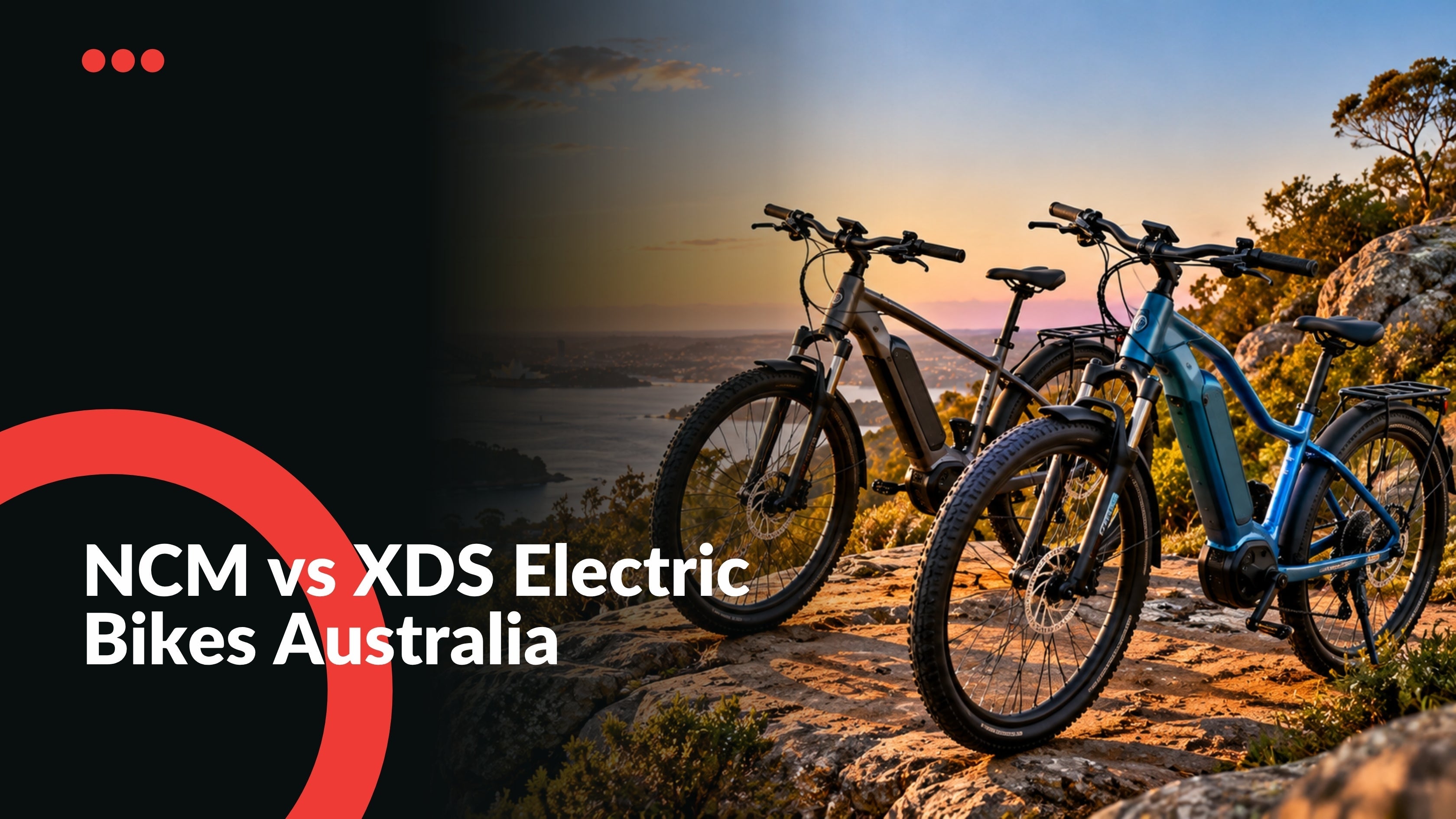
Are you researching NCM vs XDS electric bikes to find out which brand takes the lead? You need straight facts. Let's be real. An e-bike is a big investment. You want one that handles Australian roads, climbs hills, and fits your body right. Both brands have strong followings in the 2026 market. But they serve different rider needs.
In this guide, we break down the actual NCM vs XDS electric bike differences so you can decide with total certainty. Read on to see exactly how these popular models compare.
Brand Overviews and General Differences
First, let's look at the core design philosophies of both brands. XDS builds bikes with a massive focus on lightweight alloy frames and sleek aesthetics. They offer a highly natural pedalling feel with superior agility.
NCM focuses more on raw battery capacity and powerful rear hub motors. Their bikes are heavy-duty and practical for long distances. Frankly, NCM is a solid workhorse. The massive frames can feel very heavy for smaller riders, though. A standard NCM electric bikes comparison usually reveals bulky, 25-kilogram builds. On the other hand, an XDS electric bikes comparison highlights lighter frames and better rider sizing options.
Hardtail Mountain Bikes: XDS Advance 300 vs NCM M3
Off-road trail riding demands reliable gears and steady motor power. Popular hardtails like the NCM Moscow and NCM M3 feature heavy-duty Das-Kit rear hub motors and large battery packs. They handle flat dirt tracks fine. But when you hit steep inclines, they can feel heavy.
The XDS Advance 300 e-bike completely outshines them in this category. It uses a refined frame geometry and a highly responsive 250W motor setup.
XDS Advance 300 Advantages:
-
Balanced weight distribution improves stability when taking sharp corners.
-
A lighter alloy frame makes climbing steep dirt hills easier.
-
Gives you better control on loose gravel with much less physical effort.
NCM M3 / Moscow Drawbacks:
-
The rear hub motor works harder on steep inclines.
-
Rear weight distribution feels heavy on bumpy terrain.
-
If you ride trails on the weekends, the Advance 300 feels more agile and responsive.
Off-Road Models: XDS Advance 600 vs NCM M7
Some riders need extra range and power for tougher terrain. The NCM M7 packs a huge 48V 19Ah battery for long trail rides, but that extra energy comes with heavy weight.
The XDS Advance 600 e-bike offers a much smarter alternative here. It delivers top-tier trail components and nimble handling without dragging extra weight around.
Why the XDS Advance 600 Wins:
-
Provides a balanced ride that handles rough terrain with confidence.
-
Gearing upgrades provide a wider range for steep, technical climbs.
-
Costs slightly more than the 300 model, but the performance upgrade is substantial.
Daily Commuter Bikes: XDS E-Street vs NCM Milano
City commuters need reliability and smooth acceleration. The NCM Milano Plus and NCM Munich are classic trekking bikes. They feature heavy frames and basic hub motors, which work well for flat, paved paths.
The XDS E-Street e-bike is a much smarter option for everyday urban travel.
XDS E-Street Benefits:
-
Features a high-quality Bafang mid-drive motor.
-
Mid-drive motors balance the weight right in the middle of the bike.
-
Uses the bike's actual gears to climb hills effortlessly.
The E-Street is the absolute winner for hilly city commutes.
Step-Through City Bikes: XDS ICON EB-ONE vs NCM T3S
Urban riders often prefer frames that are easy to mount. The NCM T3S and NCM Venice offer standard step-through designs. The NCM T3S brings a big removable battery, but it is bulky. The heavy frame limits who can ride it comfortably.
Here's the catch. The XDS ICON EB-ONE Step Through offers a far more accessible design.
XDS ICON EB-ONE Highlights:
-
The step-through frame allows for easy mounting and dismounting.
-
Built to be nimble and highly responsive for city streets.
-
Keeps the overall weight manageable for everyday transport.
-
Priced very competitively for urban commuters.
Long-Range Step-Through Bikes: XDS Advance 600 vs NCM T7S
Riders who want step-through convenience with maximum range often go for the NCM T7S. It features a 19 Ah battery and a 34 kg weight. But taking a 34 kg bike up stairs is quite difficult.
The XDS Advance 600 Step-Through solves this problem.
XDS Advance 600 Step-Through Advantages:
-
Provides a long-distance battery range and solid motor power without the 34 kg bulk.
-
Combines the comfort of a low-step frame with premium gearing.
-
The best choice for long-distance commuters who prioritise ease of use.
Vintage Cruisers: XDS E-Conic S2 vs NCM Cru7
Vintage cruiser styles attract riders who want classic aesthetics with relaxed, upright seating. The NCM Cru7 and NCM Miami pack large 48V batteries, but their heavy frames can make tight steering feel difficult to handle.
The XDS E-Conic S2 e-bike captures that timeless cruiser look in a lighter, far more responsive frame.
Why Choose the XDS E-Conic S2:
-
Easy to pedal even when the motor assistance is turned off.
-
Lighter frame weight improves low-speed balance and handles corners much better.
-
Comes in at a lower purchase price while delivering a better fit for most riders.
Quick Electric Bike Comparison Table
Let's look at the hard numbers side by side.
|
Feature |
XDS ICON EB-ONE |
NCM T3S |
XDS Advance 300 |
NCM M3 |
|
Motor |
250W |
250W Rear Hub |
250W |
250W Das-Kit |
|
Style |
Step-Through |
Step-Through |
Hardtail MTB |
Hardtail MTB |
|
Weight |
Lighter Alloy |
Heavy 26 kg+ |
Balanced Alloy |
Heavy 25 kg+ |
|
Best For |
City ease |
Flat commutes |
Trail rides |
Dirt paths |
Local Servicing and Spare Parts in Australia
One major factor buyers forget is long-term maintenance. An e-bike needs regular check-ups, and finding compatible parts should be easy.
XDS builds bikes using industry standard bicycle components. Almost any local Australian bike shop can service the mechanical gears and brakes without issue. Spare parts are easy to source locally across Australia.
NCM uses proprietary Das Kit controllers and custom connectors. Repairs often take longer because you have to track down specific replacements. But XDS builds bikes with standard industry components. Local mechanics can fix an XDS much faster.
Which Electric Bike Price in Australia Offers Better Value?
Price matters just as much as motor size. When you look at the average electric bike price in Australia, both brands sit in a similar bracket. NCM models usually cost a bit more due to their oversized batteries.
But bigger batteries do not always equal better value. XDS electric bikes give you better frame materials and superior handling for a lower upfront cost. You save money while getting a lighter bicycle. This makes XDS a much smarter financial choice.
Final Verdict: Why XDS electric bikes Take the Lead
Both brands build solid e-bikes for Australian roads. NCM works well for the riders who just care about battery range and not about the frame weight.
Both brands make highly capable machines for Australian roads. NCM suits riders who solely care about massive batteries. They are fine for people who do not mind hauling a heavy bike around.
But for most daily riders, XDS takes the lead with lighter builds, reliable components, better sizing options, and practical everyday handling. If you want an e-bike that fits your body as well as your budget, XDS takes the top spot.
Frequently Asked Questions
Are XDS electric bikes better for shorter riders than NCM models?
Yes. XDS models like the ICON EB-ONE feature deep step-through frames. This makes them much easier for shorter riders to mount and control compared to the bulky frames on many NCM models.
Which brand offers better handling for Australian trails?
XDS takes the lead for off-road handling. Models like the XDS Advance 300 feature refined geometry and better weight distribution. This makes steep trail climbs require far less effort than the heavier NCM mountain bikes.
How do the battery capacities compare between the two brands?
NCM generally focuses on larger and heavier batteries. XDS focuses on optimising motor efficiency. This keeps the bike significantly lighter and easier to manoeuvre on daily rides.
What is the average electric bike price in Australia for these brands?
Both brands are highly competitive, generally sitting between $1,500 and $3,000. XDS models often provide better overall value. They include lighter alloy frames and highly reliable components at very attractive price points.
Are both NCM and XDS legal to ride on public streets in Australia?
Yes. Both brands restrict their motors to a 250 W continuous rated output and cap pedal assistance at 25 km/h. This complies with strict Australian street laws. You can ride them on public roads and shared paths legally.


Leave a comment